Can You Refinish Engineered Hardwood? Often, Not Always
Published on
Can you refinish engineered hardwood? Yes, in most cases, as long as its top layer of real wood is thick enough to sand without reaching the layers underneath. It can’t be done as many times as on solid hardwood, and some thin products can’t take a full sanding at all.
So the useful question for your floor is how much wood is on top. That’s what we look at first: most floors with enough thickness left can be refinished instead of replaced, and we can tell which kind yours is at the visit.
What decides it: the wear layer
Engineered flooring is real wood, built in layers.
The NWFA’s installation guidelines describe a top layer, called the lamina or wear layer, bonded over core layers and a backing; the core can be a different species from the top. The finished boards range from 3/8 to 3/4 inch thick, and the construction varies by manufacturer and by product.
Only the wear layer can be sanded. Under it is the core, which is not meant to be seen. The NWFA’s homeowner guidance is direct about the consequence: engineered floors can be sanded and refinished, but not as many times as solid wood (NWFA, types of wood floors).
According to Bruce, one of the large manufacturers, engineered floors can be sanded and refinished several times if the top layer is thick enough, though typically fewer times than solid (Bruce, “Solid vs. Engineered Hardwood”).
How many times, exactly? The NWFA doesn’t give one number. It names five things instead: who sands the floor, the machines used, the wear layer’s thickness, how flat the floor is and what shape it’s in (NWFA, refinishing your floors). Charts online that turn millimeters into a number of sandings are rough guides at best.
How to find out what’s on top of your floor
- Look for the paperwork. If you know the brand and collection, the spec sheet lists the wear layer. That’s the thickness when new; any earlier sanding has already taken some of it.
- Look at an edge where the board shows its profile: at a floor register, a threshold, a stair nose or behind a removable transition. The top band of solid wood above the layered core is the wear layer.
- Check how the top was cut. The NWFA describes sawn veneers, cut like solid lumber, and sliced or rotary-peeled veneers, which have thickness limitations.
- Notice the plank width. Bruce lists extra-wide planks among the designs that may only be possible in engineered construction, so a floor of very wide boards may not be solid even if it looks it.
What you find, and what it means for sanding
| What you find | What it means | Likely next step |
|---|---|---|
| A thick wear layer, never sanded | Room for a careful full sanding | Sand and refinish |
| A thin wear layer, or one you can’t confirm | A full sanding risks cutting into the core | A maintenance coat, or replacement if the wood itself is damaged |
| Hand-scraped or wire-brushed texture | Sanding flat removes the texture you paid for | A maintenance coat, or accept a smooth floor |
| Beveled edges | A light sanding leaves the bevels as grooves; flattening them takes more of the wear layer | Decide whether the bevels stay before sanding starts |
| Damage that goes through the wear layer | Can’t be sanded out | Replace those boards |
| An acrylic-impregnated product | The NWFA notes that recoating these with urethane typically voids the manufacturer’s warranty | Check the warranty before any coat |
Board replacement works on engineered floors the same way as on solid ones when they’re nailed or glued down: the NWFA’s repair chapter covers both. After a few new boards go in, refinishing the room is what makes them blend.
What a sanding takes off, in photos
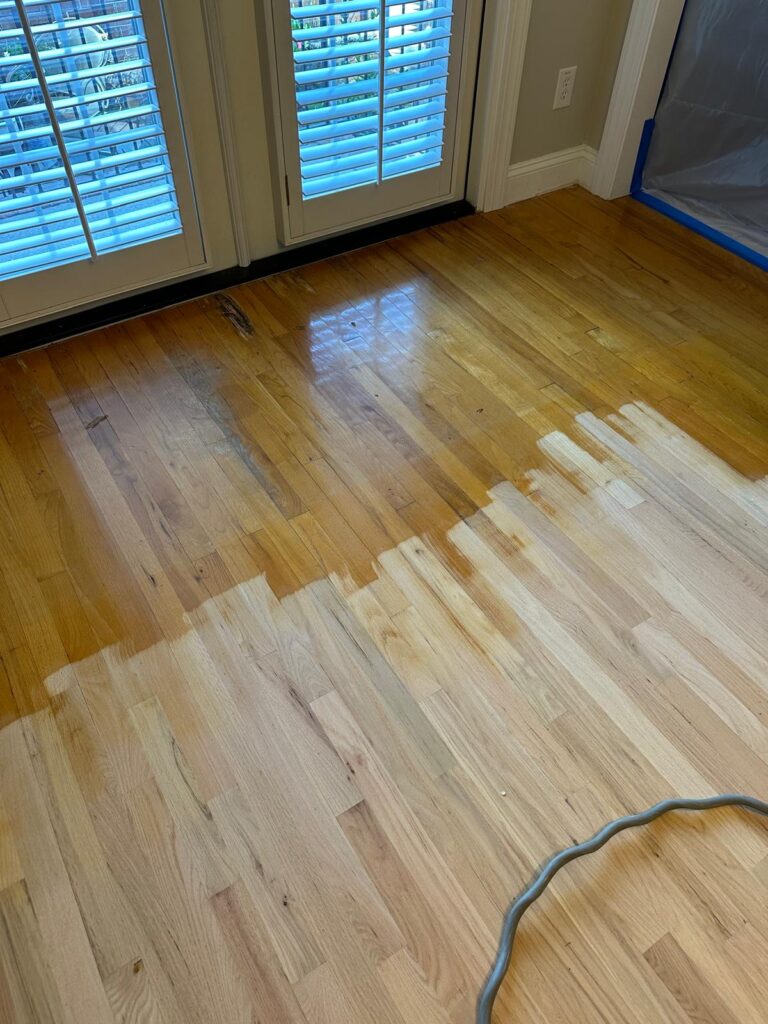
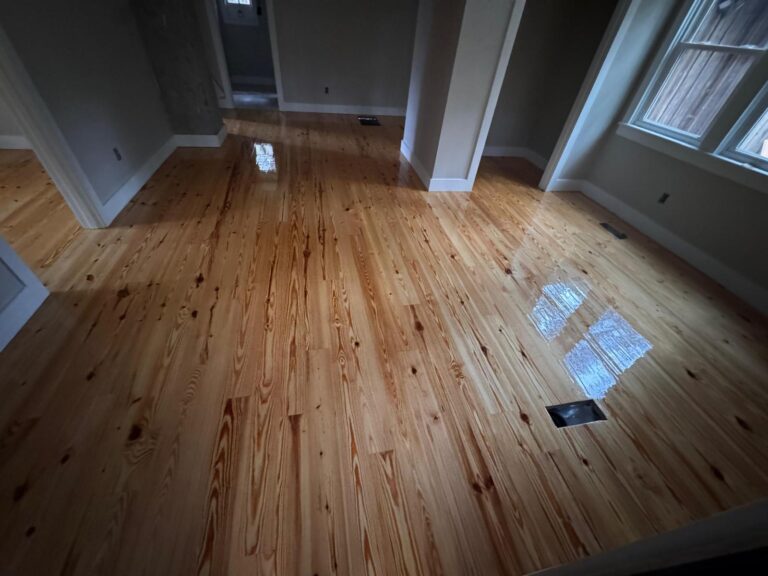
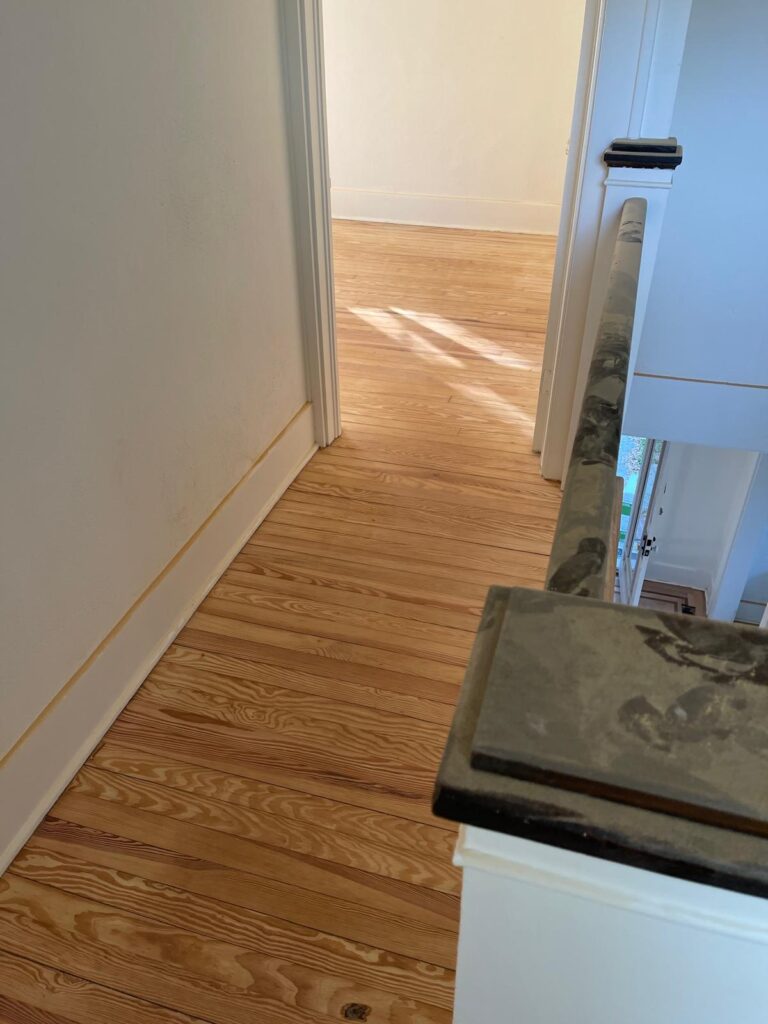
This floor, from our Whole-Home Transformation project, was photographed halfway through sanding. Where the sander has passed, the old finish and its color are gone and bare wood shows; near the doors, the old finish is still on.
On an engineered floor, everything removed at this stage comes out of the wear layer, which is why the cut has to be lighter and the edges handled with more care.
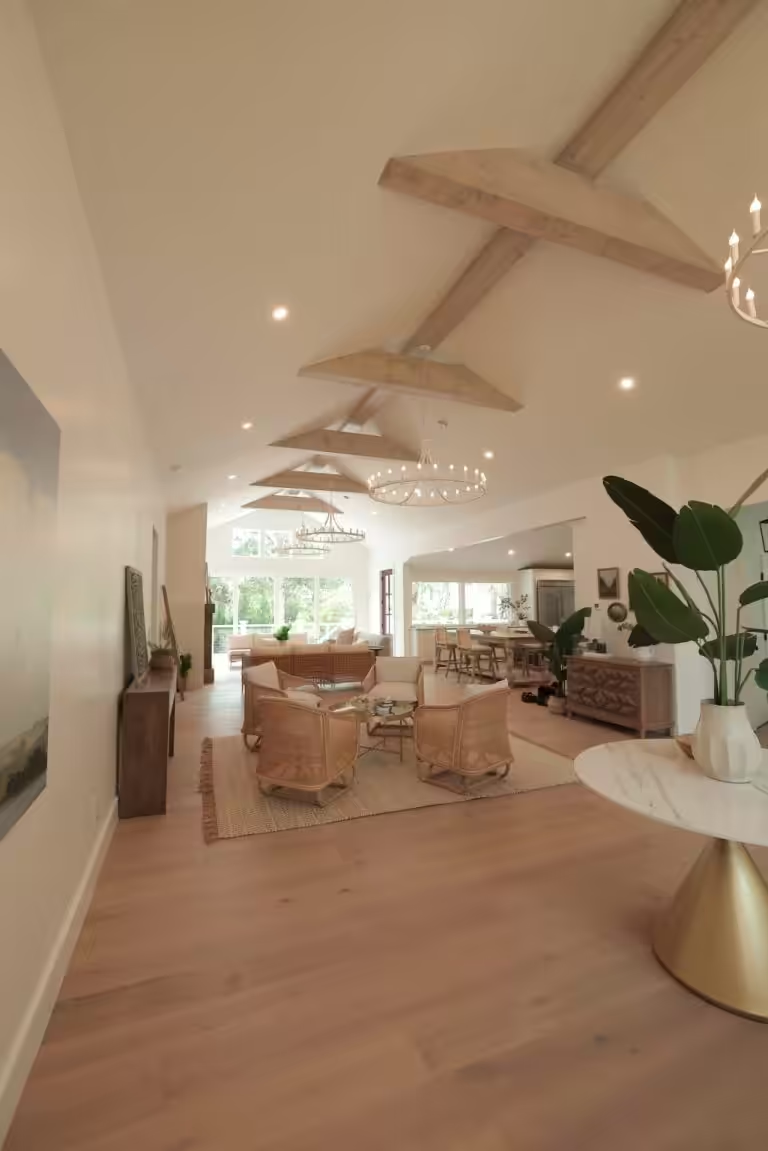
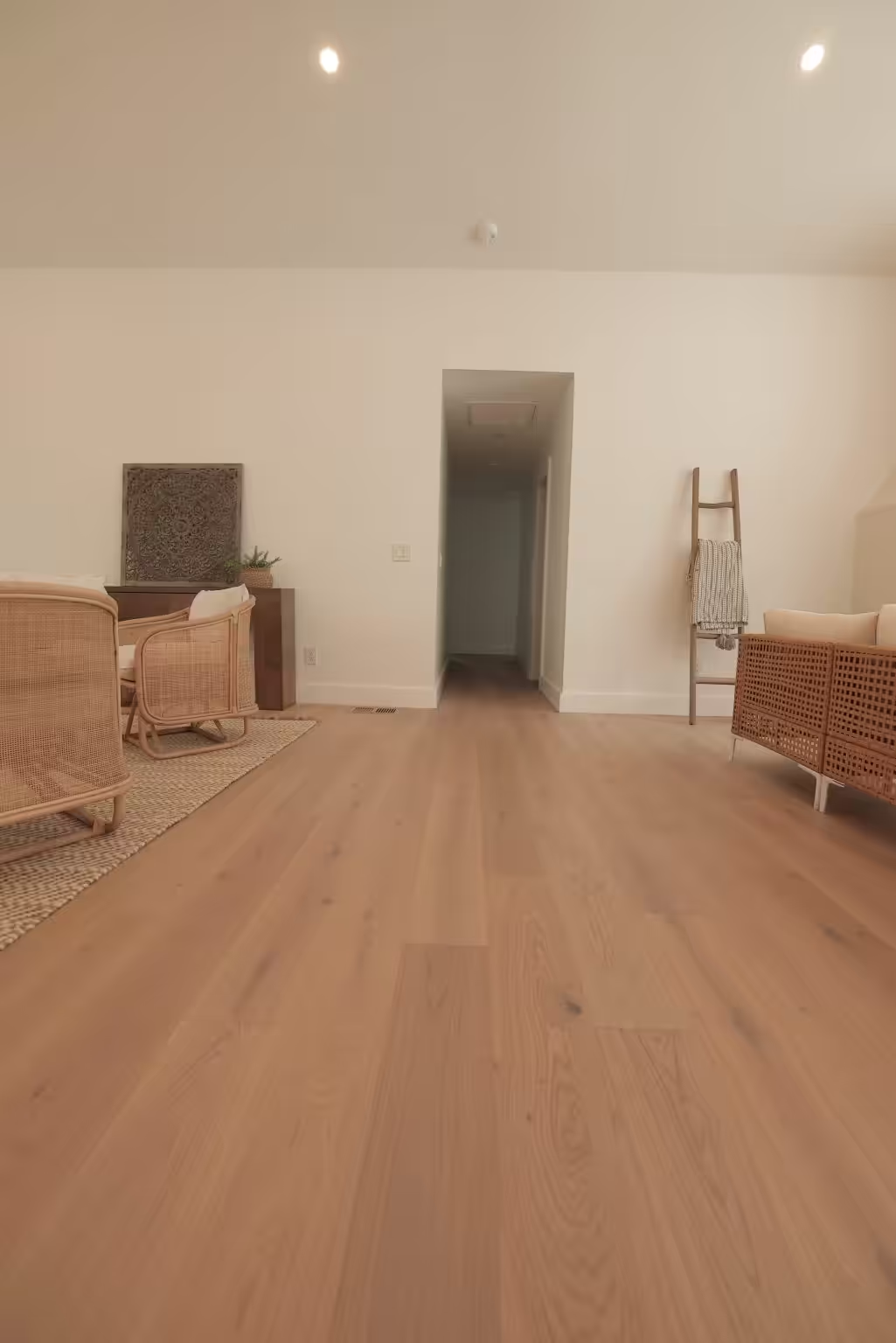
The featured image shows the kind of floor where this question comes up: wide-plank white oak, from our Vaulted Coastal Great Room project.
How the floor’s condition shows up in the price
Area sets the base, and the rest comes from the floor itself: how thin the wear layer is (a lighter cut takes more time and care), texture or bevels, stain or a color change, the number of finish coats, boards that need replacing, and prep for a factory finish that’s being recoated.
Engineered or solid: what changes for refinishing
For refinishing, the difference is simple. Solid hardwood can be sanded and refinished many times over its life; engineered can be refinished too, but its limit is the wear layer. Engineered tends to behave better over a concrete slab and in high humidity, which matters on the coast.
If you’re weighing a full sanding against replacing the floor altogether, our guide on whether to refinish vs replace hardwood floors walks through the other questions: water, the subfloor and damage to individual boards.
When it shouldn’t be sanded: the other options
- A maintenance coat. When a floor just looks dull, the NWFA describes cleaning the existing finish, lightly sanding it and applying a fresh coat, with no sanding into the wood.
- Getting the surface ready for that coat. Finish makers such as Bona require a floor free of wax, polish and oily residues before a new coat, and warn that adhesion can fail otherwise.
- Replacing damaged boards, then coating the room so it reads as one floor.
- Replacing the floor, when the wear layer is gone or the damage is through it.
The NWFA also warns that cleaning products the manufacturer doesn’t recommend can cause adhesion problems when it’s time to recoat, so tell whoever coats your floor what you’ve been cleaning it with (NWFA Installation Guidelines).
We look at the floor and its edges before pricing anything, and put the answer in writing. To book that visit, start with our hardwood floor refinishing page; if the floor turns out to be past refinishing, see our hardwood flooring work.
Keep reading